Whole Line Wood Pellet Plant

2 Ton Per Hour Pellet Plant
We are a bit delayed in the installation of our 2 Ton Per Hour ( 2 TPH ) Whole Line Wood Pellet Plant . New date for commissioning have been push back to End of April 2011 .
Lots of minor problems with China Whole Line Design and Installation .
I admit we overlook a few areas and also the professionalism of China Machinery Supplier are in doubt especially in Project Management and also the linkage between each section in the Whole Line Plant .


But in the process we also learn a lot for our future expansion plan and possibly our new 2nd line maybe in 6 month to 1 year time .
We now believe that our pellet mill are one of the best from China and hopefully when it is in production it should give us above 1.2 TPH for the Model 420 unit with minimal maintenance .

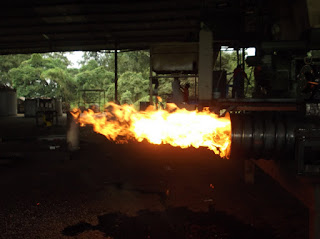
Here are some of the photos during installation of machineries at my plant .

Current Pellet Mill / Pellet Mill Plant from China have the following problems :

a ) Pelet Mill Die cracking after short time of usage
b ) Roller Bearing need constant change
c ) Constant Jamming in the Pellet Mill Die Chamber
d ) Low Density of Wood Pellet Produced
e ) Sawdust need additives during production to ensure smooth output of pellet from Pellet Mill

We also found out that many China supplier are not genuine factory owner which means they buy and sell the machineries , thus technical wise they are not up to standard unless they are supplying the best machines from the best fabricator . Normally this is not the case as the buyer will haggle about pricing , therefore the supplier will tend to get the cheaper machines which will create problems in the end . How would you know which is the best machines from China , there is more than 100 supplier of pellet mill machineries from China , everyone say they supply the best . Unless you want to CAMP there to search for the best machines . For the record , I did 3 tour of duty to China to search for the best machineries .

Pre-requisite of establishing a Wood / EFB Pellet Manufacturing Business :
1 ) Stable source of sawdust or EFB
2 ) Total Investment - RM1 Million including machineries , electricity supply , local steel fabrication , forklifts & etc for a 2 TPH Whole Line Plant
3 ) Some technical knowledge on machineries
4 ) For now , market should not be a problem , it is a matter of pricing

Lately ( the last 3 months ) , my blog have generated tremendous search for wood pellet maybe due to the current high price of fossil fuel which at the time of writing , Nymex Oil Futures is at over USD100 per barrel . Inflation in China is also causing a problem as Wood Pellet Plant pricing have also increase from initial RM750,000 earlier to over RM850,000 now , at last count . Sawdust price have also been increasing locally . If price continue to rise , it might not be viable anymore to invest in Wood Pellet Business unless Wood Pellet price play catch up in the near term .

WOOD PELLET BURNER VS GASIFIER

COMPARISON
I believe we have talk in length on Wood Pellet Burner and Gasifier , but question come to mind what is the difference between this 2 .

I list the comparison between the 2 below .
I will explain in details the pro & con for wood pellet burner and gasifier .

Pricing
After countless conversation with so many potential user who is looking for change , the big stumbling block is PRICING AND DISTRUST for new technology .

How cheap can biomass and application equipment goes , no body knows , for now this is the price and there is payback calculation for you to judge .

After considering the price , customer will ask can I see how it works , SEEING IS BELIEVING !!! AGREED .

This problem come about due to so many fly by night equipment provider who have give this industries a bad name . So once it is spoilt , it will be very difficult to make amend .

I append below according to categories , the differences :

Technicality

As mentioned above technical specification for Gasifier are much more higher than simple Wood Pellet Burner . Therefore so many of the gasifier that came up in the market in Malaysia are not successful as we Malaysian have not yet achieve the speciality in Gasification . Unfortunately some potential investor suffer due to lack of information and sweet talk by good marketers .

Wood Pellet Burner are very simple machine with some ingenious controls and design which need very simple maintenance , therefore it can be so successful in Europe due to it's simplicity .

WHO need a sophisticated machine to do the same job for 5 times the price ! ! !

Efficiency

90 % Vs 75% , why ?

a ) all biomass are turned to ash , only the ash weight and loss of heat during combustion , therefore loss is only 10% for Wood Pellet Burner . Whereas for Gasifier , big portion ( 20 % ) are turned to carbon and therefore efficiency is only 75 % with heat loss . Unless you want to sell the carbon !!!

b ) In Wood Pellet Burner all the biomass are combusted in optimum Air Fuel Ratio ( AFR , 1 kg wood pellet to 5 kg of air ) and immediately the heat are channel into boiler / furnace , loss will be low as this happen instantaneously . Whereas for Gasifier it goes through a few process , pyrolysis , gasfication , syngas cleaning then only the syngas are channel to burner for burning . Moreover you must have very good burner to control the AFR otherwise you will not get good optimum combustion , causing more loss in efficiency


Ash / Carbon Discharge , Operator Needed and Cleaning / Servicing

As Gasification produce carbon which is higher in weight ( 20 % ) compared to fully combusted biomass where it only produce ash ( below 1% for wood pellet ) , therefore Wood Pellet Burner are much more simpler compared to Gasifier .

Moreover more monitoring are needed for Gasifier to ensure Gasification are optimum which is difficult to achieve consistently especially so if the biomass feed are inconsistent .

Gasifier end product is Syngas which is high in Tar level , to ensure burner are not clog , the syngas need to be clean , with scrubber and filtering , which in the end ( once a week , depending on system ) , need to be clean and service otherwise the Gasifier will stop working .

Control of Burner

Wood Pellet Burner as mentioned above are very simple but with good design equipment . Control in the case of firing into Boiler would be very simple , just fire into the boiler , when pressure in the boiler are reach the burner will go into sleep mode and the burner will fire again when pressure drop to lower level set , simply similar to diesel burner , that is why it is so easy .

In Gasifier case , the fuel for firing into boiler is Syngas , sometimes you get good composition syngas , sometimes you do not , so control will be difficult or it would not be optimum or lower in efficiency .

Pros for Gasifier - Application , Flexibility of Burner Positioning , Usefulness of Carbon and Cleanliness of Combustion

Unless you find you need this Pros , these are small benefit you need to forego to attained the pros of wood pellet burner .

You cannot get perfection unless you are willing to pay very high price .

REMEMBER GASIFIER IS 5 TIMES MORE EXPENSIVE !!!

WOOD PELLET / EFB PELLET BOILER

BOILER

The boiler are design for winter heating in Europe and are suitable for industries which need hot water e.g hotel hot water supply and industrial cooking .

In Malaysia , currently all small and medium size boiler are fuel by either gas or diesel making it environmental unfriendly .

The high number of boiler using fossil fuel are due to the following reasons :

1 ) Previous low oil price at below USD40 / barrel ( around RM1.00 / liter )

2 ) Convenience in handling diesel boiler

3 ) No other alternative ( technology & supplier of biomass boiler )

4 ) No other suitable fuel for small boiler

5 ) Perception of Biomass Boiler are unclean

Most of the above reasons are currently being solved with new technological advancement and availability of new biomass boiler and suitable fuel ( Wood Pellet or EFB Pellet ) .


We plan to introduce this type of pellet boiler for industrial user in Malaysia with our wood pellet .

Pricing start from RM75,000 for 200,000 kCal / hour to RM200,000 for 1,000,000 kCal / hour Wood Pellet Boiler . The low cost are due to mass production for this type of boiler .

Payback are normally within 5 month to 1 year inclusive of the boiler , FOC after the payback period .

Characteristic of Wood Pellet / EFB Pellet Boiler are as follows :

1 ) Fully automatic with preset temperature needed for the hot water , burner will start and stop at preset level

2 ) 90% efficiency due to it's design and efficient air fuel ratio balance during combustion

3 ) high safety feature without chances of explosion as it uses wood pellet which is less flamable

4 ) very clean burning without smoke although ash need to be dispose off once every week

5 ) space saving as structure of the boiler is compact and sturdy

For the first unit we sell in the Malaysia market , we are giving great discount to promote this technology .

Write to us / Call us NOW ! ! !

Wood Pellet Burner

Wood Pellet Burner / EFB Pellet Burner
Availability of wood pellet in the Malaysia Market have enable the introduction of Wood Pellet Burner .
Wood Pellet Burner can be categorised into small home use type ( typically below 100kw ) or big unit for replacing diesel / gas burner for industrial use ( from 300kw to 2,500kw )


Small Wood Pellet Burner
With consumption of over 10 million ton wood pellet in 2010 , Europe is the biggest market of wood pellet . Usage of wood pellet burner to replace fuel oil / diesel / gas burner have been taking place for the last 10 years or more . Therefore wood pellet burner produced are very technologically advance .

The burner have characteristic as follows :

1 ) Fully automated - even with modulated firing

2 ) lambda sensor - oxygen sensor in the flue gas , to adjust air input for efficient combustion

3 ) > 90% efficiency - very close to diesel / gas burner fuel to heat conversion

4 ) Automatic Dust cleaning mechanism

5 ) automatic ignition , sleep mode , timer , remote control , mobile phone control , etc

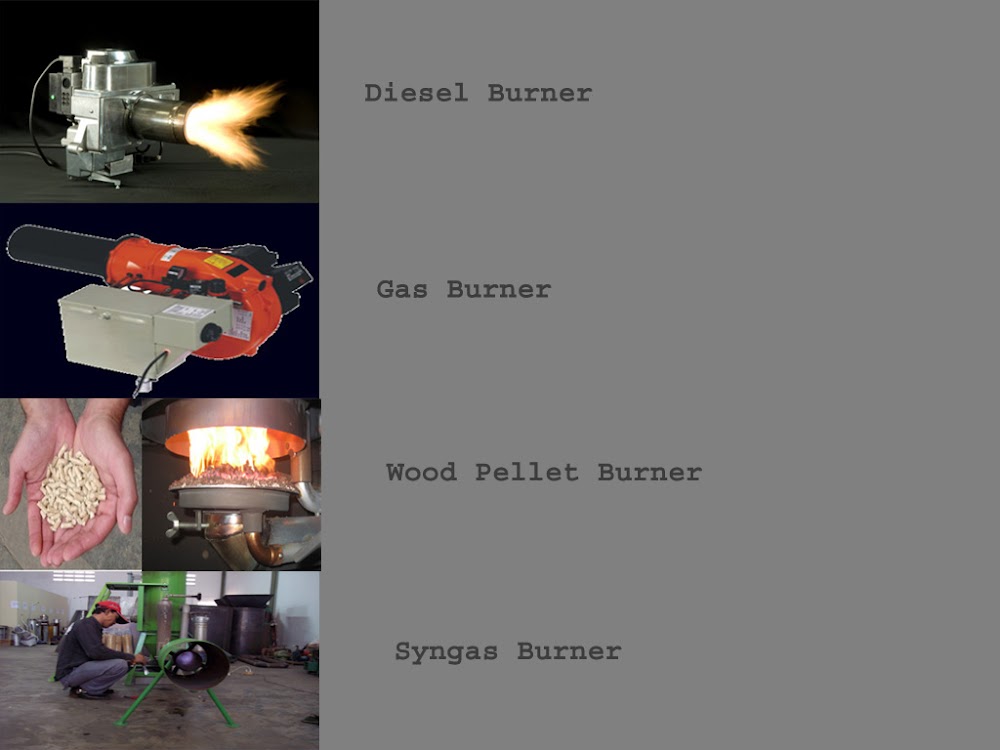
6 ) easy conversion from oil burner to wood pellet burner without modification
Changeover from Diesel Burner to Wood Pellet Burner


Industrial Wood Pellet / EFB Pellet Burner

We will be launching this Burner in a month or two which have the following specification :
1 ) Replacement of diesel burner with capacity of 300kw ( 250,000 kCal/hr ) to 2,500kw ( 2 Million kCal / hr ) . This is similar to diesel burner firing into a 0.5 ton per hour to 4 ton per hour steam boiler .

2 ) Control is by pressure sensor similar to diesel burner automatic firing although modulation firing are not available currently .

3 ) Savings in fuel consumption are from RM37/hour for 300kw unit and RM298 / hour for 2,500kw unit .

Cost of the Burner from RM40,000 to RM120,000 . Payback in 6 months for the small unit and 4 months for the big unit . Gasifier of similar capacity cost 4 to 10 times more .

Wood Pellet Burner - 200MW / 180,000 Kcal / hour

THIS IS ONE OF THE MAIN REASON WE HAVE BEEN HOLDING BACK ON OUR GASIFIER PROMOTION FOR THERMAL APPLICATION .

By far and large , wood pellet due to it's size consistency , high and consistent calorific value , availability , stable price & eco friendly fuel are very suitable for the replacement of diesel or gas .

START helping the environment to reduce emission of CO2 ,

DO YOUR PART .

Drum Dryer

Sawdust Drying

We are touching this topic specifically due to it's importance to make good wood pellet unless your sawdust is already dried to 15% Moisture Content ( MC ) .
If you have gone through our earlier writings , the cost of drum dryer are significant for a Whole Line Wood Pellet Plant . The High price are due to it's big structure and complication in maintaining stable MC sawdust output . Sawdust comes in various MC from 12% to 60% , therefore it is important to control the MC for optimum pelleting otherwise you would not get high standard wood pellet and high production efficiency .

We will now study a typical drying process base on the following conditions :
1 ) Input Sawdust MC 35%
2 ) Output Sawdust MC 12%
3 ) Drying Rate 2 Ton Per Hour Output
To reduce MC from 35% to 12% you would need to evaporate 20% of water , based on 2,000 kg per hour output , water that need to be removed is 600kg and the input sawdust is 2,600 kg/hr .
To remove 600kg of water you will need 640kw ( 550,000 kCal/hour ) of energy which is equivalent to burning 200kg/hour of wood offcut . In short 100kg/hour need to be combusted to dry 1 TPH ( output ) sawdust . Cost of drying would be about RM5 / ton sawdust if your offcut cost is RM50 / ton .
The Calculation Chart below is from ASPENTECH software and reconfirm by manual calculation which I did not show here due to it's tediousness of calculation , suffice to say the input data , output data and design of the dryer are correct .

Drum Dryer selection are important , many factor affect the cost of the dryer , in this case we believe Drum Dryer Size of Diameter 1.5 meter X Length 9 meter should be enough to dry 2 TPH of sawdust .
Cost of this dryer should be around RM200,000 landed in Malaysia c/w stove , electrical panel and cyclone .
We hope to use this Dryer and the Pellet Mill to make EFB Pellet once we have started Wood Pellet Production probably in August 2011 .

Wood Pellet Plant

Whole Line Wood Pellet Mill Plant

As promised , today I will be writing about Densification of Wood Biomass to make Wood Pellet .
Wood Pellet can be made of wood sawdust , wood shavings , timber offcut and woodchip .
The purpose of Densification are as follows :-
1 ) common size - enabling automation ( automatic feeding and burning just like diesel/gas burner with high efficiency )
2 ) high calorific value - optimum combustion efficiency ( 90% efficiency is possible )
3 ) high density - lower transportation and storage cost

To achieve the above purpose , Feed Mill Machines have been turn to make wood pellet with some modification as wood have higher density and more difficult to be pelletised compared to animal feed .

Unless you are setting up large size Pellet Mill Plant of 20 TPH , small machineries from China would be more suitable due to their much more lower cost .


From our studies of wood pellet processing , optimum size of operation should be of 2 TPH to 5 TPH due to the availability of raw material , operation cost , profit margin and marketing .
Let's take a closer look at a 2 TPH Whole Line Wood Pellet Plant .
It will include sectional processing as follows :
1 ) Material Processing - Hammermill , Screener - RM75,000
2 ) Drying - Drum Dryer - RM180,000
3 ) Pelleting & Conditioning - Pellet Mill , Conditioner / Cooler - RM160,000
4 ) Packing - Storage Bin , Packing Machine , Weighting Scale - RM30,000
All the Segment above can be connected with belt conveyors , screw conveyors or bucket elavator to make it fully automated with only 5 workers during operation . Additional cost for this could be around RM150,000 .
Electrical , Local Fabrication , Installation Cost , Training will cost another RM120,000 .
Provision for 6 months Spare Parts and Miscellanous will cost RM50,000 .
The above is indicative cost of setting up a Whole Line Wood Pellet Plant based on 2 TPH production .


You could refer to the side bar and the bottom for some pictures of the above machineries .
Call us if you need further consultation .

Pellet Mill

Pellet Mill are the " HEART " for Wood Pellet Production , Very Important . All other equipment are Ancillaries .
Pellet Mill Equipment from China are still at a very infant stage as compared to American or European Pellet Mill , but pricing wise , it is only 1 / 5 the price .
Unless you are going for very high output and have the investment capacity to invest for very long term , China Machines are of better choice .
And even so , you have so many Suppliers , Hundreds maybe , some are Merc , some Toyotas and some Protons , you could guess what I mean , pricing starts from USD20,000 to USD50,000 / unit for a Pellet Mill and Whole Line Plant can range from USD200,000 to USD650,000 for a 2 TPH Line . We have scour many part of China for the right machines .
The lower range will get you to do more maintenance and lower production and the higher range might not be feasible for Malaysia Environment . So , choose wisely .
Due to it's infancy , choosing the right Pellet Mill are important as it have the following problems that need to be address :


1 ) Die Chamber too Hot thus Die will break under stress ( Die cost RM6,000 / unit )

2 ) 24 hours operation not possible

3 ) Standard Die size of 420mm Diameter ( the normal Model SZLH420 MZLH420 ) definitely cannot produce more than 2 TPH per machine , if all conditions are right maybe you would get 1.5 TPH , this is where the learning curve start , how soon can you achieve optimum production , simple calculation , shortage of 0.5 TPH X 2 machine X 16 hour / day X 26 day / month X 3 months X RM100 / ton = RM124,800 in Sales Value , so imagine the savings if it is longer than 3 months . ( Some Manufacturer are claiming above 2 TPH , even 3 TPH )
The Pellet Mill we chose have somehow resolve partially some of the above problems with the right combination of ancillaries equipment . In our opinion it is of reasonable pricing and technically capable to handle over 2 TPH wood pellet production with minimum staffing .
You are invited to visit us once production starts .
The problem above may need another 5 years to solved as the supplier of this machines learn from mistakes and improved on it .
Our target is to invest in reasonably priced machine , high efficiency and low maintenance , so that we can recoup our investment in shortest time possible and have a decent profit to show .

WOOD PELLET


WOOD PELLET
This is a new industry in Malaysia with only a few small plant of 1 ton per hour ( TPH ) production .

We are putting up a 2 TPH Whole Line Wood Pellet Mill Plant operational in April 2011 .
Write us if you need Wood Pellet or want to set up a Wood Pellet Plant .


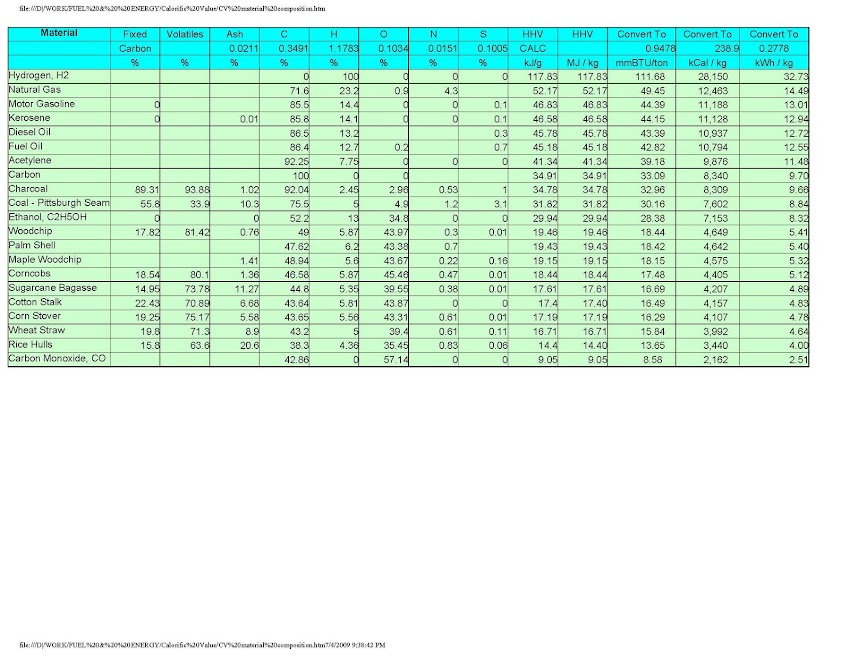
The chart shows normal Biomass Calorific Value with various Moisture Content .

These means the higher the Moisture Content ( water in the Biomass ) the lower the Calorific Value of the biomass because when you burn biomass you will need to heat the biomass to above 250 ºC . before you reach this temperature , during combustion water need to evaporate at 100 ºC , the more water you have in the biomass the more energy you need to spent to evaporate the water thus the lower Calorific Value if the MC of the biomass is high .
It means , you are buying WATER not ENERGY !!!
Many articles have put Wood Pellet Calorific Value at 4,200 kCal/kg with bulk density of 600 kg/m3 thus making it more viable to be transported over long distance as compared to woodchip at 300 kg/m3 and sawdust at 200kg/m3 .
Furthermore Wood Pellet are dry at below 10% MC thus giving it a high ratio of enegy / volume .

From the table , Wood Pellet are reasonably priced in relation to it's energy value . The high cost per ton are due to processing cost needed for densification and drying .

As Wood Pellet are of constant size it usage can be easily automated just like gas or diesel burner . And the beauty is you can achieve over 90% combustion efficiency just like gas / diesel burner as compared to normal burning in furnace which efficiency are low at below 80% combustion efficiency . It is very technical !
In fact , most European Countries and now Korea , combustion now have shift to Wood Pellet from gas or diesel due to it's availability , environmental concern and government tax on fossil fuel .
Lately there is this hot topic of turning EFB to EFB Pellet . It would be great if it is suitable and there is market for it .
We are working on launching Wood Pellet Burner in a few months time together with our Wood Pellet .
STAY TUNED .

HURT no more for NOW !!!

It have been 3 months since the last posting and oil have peak at USD147 per barrel and now hovering around USD40 per barrel .
What happen to the prediction that it could fly to USD200 , who knows ?
Today I got to take out the main picture of " Yep's It's gonna hurt " for now until the time comes by again .
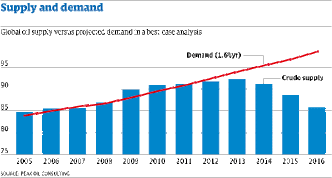
Many prediction have been made on oil with most of the consumption of world oil being as per chart below :


Part of the prediction in the chart is true but due to US recession occuring now demand for oil have drop thus bringing down the price of oil .

The low oil price is not good in a sense that companies will curtail the spending on R & D to find source of renewable energy therefore slowing down the efforts of reducing the effect of Global Warming .

I remember being to a few companies which are heavy user of diesel fuel for heating purposes and gather that when Nymex oil future were above USD100 per barrel all are gearing up to change to biomass due to its lower price and insignificant fluctuation in prices . I would guess as of now none is intending to do so as price of diesel have drop back to RM1.50 per liter for industrial usage .

When will this industrialist change their mind set as oil will not continue to be low and continous burning of fossil fuel is not helping the humane cause of reducing global warming .

In short , Malaysians are not only short sighted but reluctant to move out of their comfort zone as compared to Europeans which have been changing to wood pellet heating instead of gas for the last 10 years or so .

The encouraging change over to biomass heating in house hold in Europe are due to a few factor list as below :

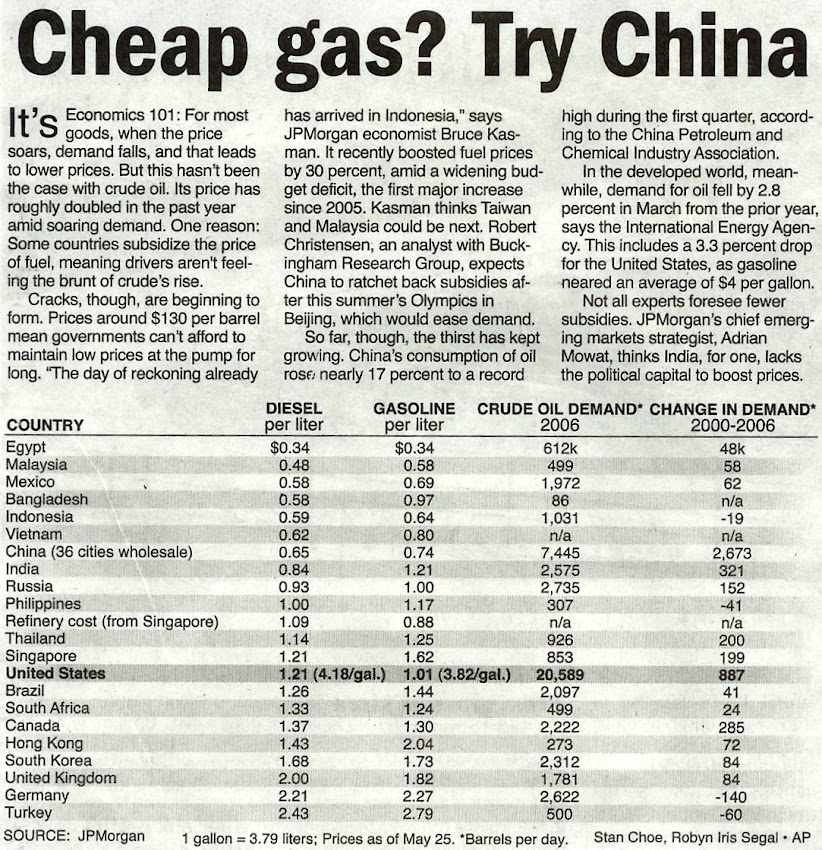
1 ) high government tax on fossil fuel , noticeably Europe Gas Price is over double the Rest of The World, click Link : " Gas Prices Around The World " on the sidebar

2 ) availability of convenient automated heating stove and proper fuel in wood pellet

3 ) the caring way of Europeans which are moving to complying to KYOTO PROTOCOL even though price of wood pellet are just a fraction cheaper than Heating Fuel

None of the above factor exist in Malaysia ( or even outside Europe ) thus making it difficult to convince consumer to change over to biomass for heat and power .

Malaysia Government are at least now holding the price of Industrial Diesel at RM1.50 per liter to encourage industrialist to find ways to reduce fossil fuel consumption although Nymex oil at USD40 per barrel would translate to RM1.10 per liter . These is an encouraging effort by the Government which should be applauded .

The government should do more by using the tax collected on the diesel by giving grant to companies which change from fossil fuel to biomass . These is widely practice in Europe and even Japan to encourage usage of biomass .

Here is a link to Peak Oil cartoon .

http://www.youtube.com/watch?v=jriYKmMN8_I

Don't worry it did not happen as yet .


CHEAP OIL

OIL price per barrel have fall to USD50 per barrel now which work out to around RM1.40 per liter for industrial diesel user . These is only a fraction of the peak price of around RM4.00 per liter in June 2008 .


Today we will talk about oil .

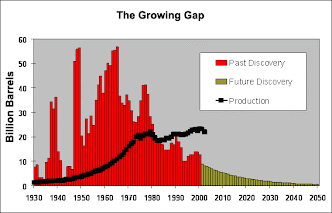
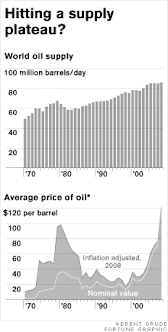
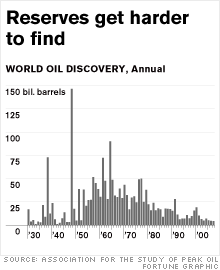
I append a few chart on oil .


Worldwide oil consumption have been stabilising at 80 million barrel per day for the last 5 years and yet there is no more significant new oil reserves found in the last 2 decades .

Although currently the price of oil have drop significantly due to recession in the USA , China and India are continuing with annual GDP growth of over 8% . Imagine this 2 country compounding growth of cars alone will consume all the supply available in a few years time .
In fact now , China monthly vehicles sales nearly top 1 million unit per month .
Therefore " PEAK OIL THEORY " are very real in time to come .

Energy & Peak Oil

ENERGY AND PEAK OIL
The last few decades of mankind progress depended on oil and gas .
Over 80 % of the world energy needs are generated from oil and gas which is categorised under fossil fuel which is non renewable . Fossil fuel which takes 150 million years to be generated will be consumed in our life time and future energy needs will come from renewable sources such as solar , wind , hydro and biomass .
Many journals on energy are convinced that current oil production at around 80 million barrels per day are peaking and the spike of oil to USD147 per barrel are due to simple mathematics where demand exceed supply . Although currently oil have turn bearish to USD80 per barrel it will peak again in the future as oil are a finite resources .
A lot of hype on peak oil subject when oil shoot over USD100 and many documentaries have been made on the matter . Some even predicted it will go to USD500 per barrel !!! . It might , in the future go to this price especially when China and India have GDP growth of over 8% per annum .
High oil prices will encourage government and business sector to find ways to reduce fossil fuel consumption and spend on R & D to find alternatives . The growth of oil consumption to these level are due to low oil prices during the 1970s to 1990s where it hover below USD50 per barrel . Thus the low oil price have cause other problem such as excessive carbon dioxide emission which bring to global warming .

Earlier last month the north pole are accessible by ship for the first time due to melting ice .
High oil prices in Europe ( due to taxes by govenrment ) have created more advance technology and more changes to usage of renewable energy . Currently a high percentage of winter heating in Europe home is by biomass such as wood pellet or wood chip . A power plant in Holland even import Palm Kernel Shell from Malaysia for the combustion in their power generation plant .
In Malaysia where there is abundance of biomass but due to lack of Research and Development, biomass is only being used by certain industries which have biomass at their door step . Most other industries are using diesel or gas for their thermal needs as it is more convenient to do so .
There will come a time when oil peak again , many industries which are caught napping will file for bankcruptcies especially if their portion of energy usage are high .
And if you or your company are a high user of fossil fuel please try to change to renewable energy as global warming are real and it will affect us and our children in the future .
The famous quote :

We do not inherit the Earth from our Ancestors, we borrow it from our Children

Malaysia Biomass & Calorific Value

Choose Biomass that is low in $ / kCal instead of $ / kg .
Malaysia Biomass

Malaysia Biomass . Biomass Calorific Value are very important in the selection of fuel for combustion and gasification . This is due to Energy content per kg of biomass . You can have very cheap biomass such as EFB but due to it's Moisture Content of 65% and so Calorific Value will be low at 1,400 kCal / kg . Moreover during combustion , silica ash will scale the tube causing reduction in efficiency of boiler and fly ash is a concern with Environment Authority .

Typically there are plenty of biomass materials in Malaysia which are able to be used to replace fossil fuel . Malaysia Biomass material available are as follows :

Material Calorific Value Moisture Content
1 ) Woodchip 3,500 Kcal / kg 25 %
2 ) Sawdust 3,500 Kcal / kg 25 %
3 ) Empty Fruit Bunch 1,400 Kcal / kg 65 %
4 ) Rice Husk 3,000 Kcal / kg 10 %

The above Malaysia Biomass is among the lowest in $ / kCal ( high in energy density per RM ) and available in abundance in Malaysia .

I did not include wood pellet as it is to my knowledge still not available in Malaysia ( I would like to know who have it ? ) . This biomass will be in the future replace wood chip due to very standardise size and quality of heat output .
The above mentioned biomass are which I will elaborate more due to current available technology for full combustion which will emit no smoke . These is done by converting the said biomass to syngas .

The problem for these change over to biomass thermal application is the lack of suitable biomass material , inconsistent quality supply of biomass , system for combustion , high delivery cost , long perceived thinking that biomass emits heavy smoke , storage problem for user and etc .

For the record , the favourite , Diesel ( Calorific Value - 8,770 Kcal / liter ) was the thermal fuel in Malaysia which is widely available and cheap for the last decades . As it is now a heavy burden to many industries , it is time to change to biomass not only that it is green , it will also enable industries to save on high fuel cost .
Here I will go into details for Wood Chip as the preferred biomass due to reason i will mention below .

Wood Chip

is a product derived from sawmill waste . Quite recently in the last 1 year or so , plenty of wood chip production come on stream due to demand from MDF and Particle Board Manufacturer . But now due to it's limited supply , price have moved up and stablilised at around RM150 / ton to RM200 / ton depending on delivery cost . I am suggesting this biomass material ( Wood Chip Only ) to be used as fuel for gasifier due to
a ) year round availablity
b ) easy delivery
c ) lower cost of transportation
d ) ease of handling
e ) lesser contamination at user factory
and etc .

At the price given it will work out to RM0.061 per mmCalorie ( RM15.47 / mmBTU ) compared to diesel when price is RM3.20 / liter at RM0.354 per mmCalorie ( RM89.18 / mmBTU ) . From this comparison you can see that wood chip is only 17 % of diesel .
WOW , did anyone realise this ???
Yes , I did claim that there is 70 % savings only for change over to gasifier , this is due to some loss of heat during gasification process , in some unefficient gasifier you might get even lower savings in the range of 50 % to 60 % only .

The reason I did not elaborate on EFB ( Empty Fruit Bunch ) eventhough it is cheap is because it need to be further process and the calorific value is very low . Another reason is that my proposed gasifier system might not be able to take these fuel or I would rather say efficiency will be very low . There is Ah Niau and Ah Kau that would say , what savings of 70% , mine can do at least 90 % savings with EFB as it is cheap , HAHAHAHHAHAH , BE CAREFUL .

But I promise you if you can wait a few years ( or your factory can wait for a few years ) I will try to bring 90 % to you . These is when Oil at USD200 per barrel and EFB can be use .

So the saying goes like this , YOU GET WHAT YOU PAID FOR !!!

ACT NOW !!! AND GET BACK YOUR INVESTMENT WITHIN 1 YEAR ..........

The next blog will be on choosing the right gasifier . Am I up to it ???

Bye for now .